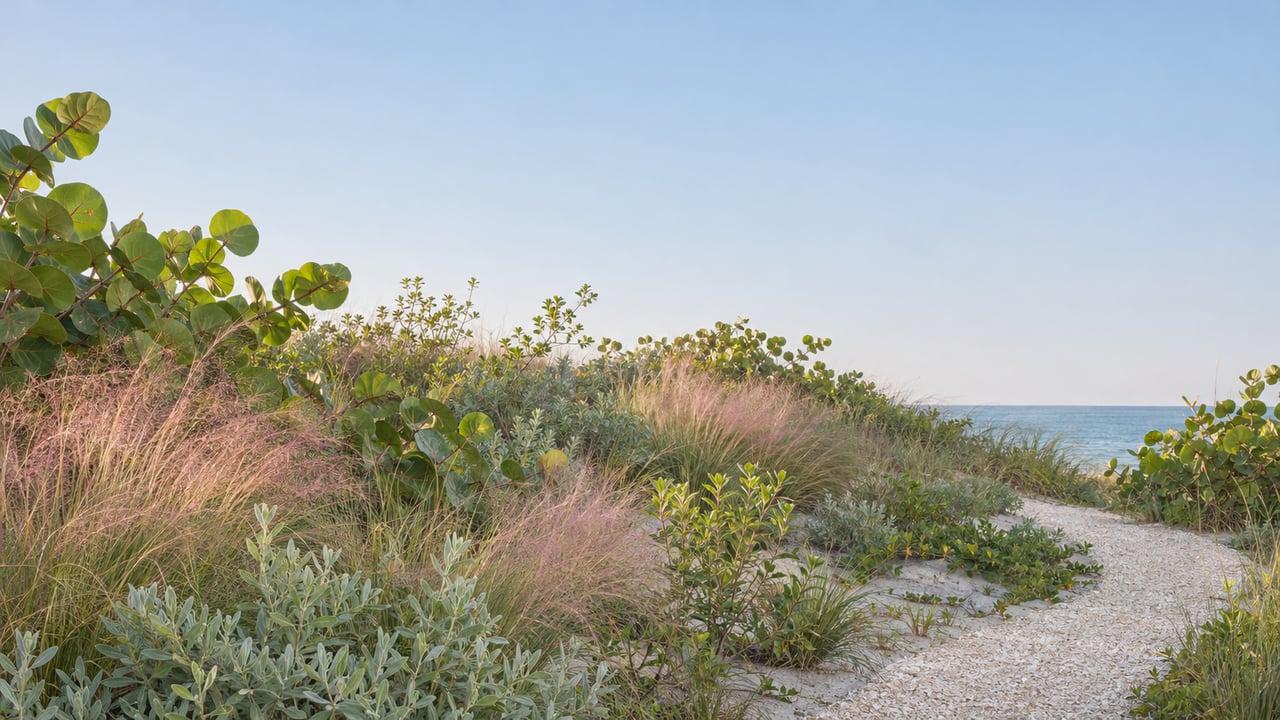
Just behind the beach at Phipps Ocean Park there is a natural ridge, and for decades it hid the Atlantic. Anyone walking the park saw thick, overgrown planting and no water. The new path goes along the top of that ridge. It passes picnic pavilions and overlooks where the ocean is in view for most of the walk, and it opens to the public today, Thursday, November 19, when the Preservation Foundation of Palm Beach and the Town hold the grand opening at 11 a.m.
The ribbon cutting celebrates the finished construction. The planting is a different matter. The $31 million restoration put about 80,000 native plants into 20 acres on the South End. The design treats them as a woodland that should grow in over years, and it built the nursery that will help that happen right next to the Little Red Schoolhouse. The park on opening day is the starting point.
The ridge that used to hide the ocean
In 1948 the Phipps family gave the Town of Palm Beach 1,200 feet of oceanfront. Palm Beach Illustrated reports that the land was never updated after that and became overgrown and underused. The Preservation Foundation describes the gift as land meant for a public beach and oceanfront park running from the Atlantic to the Intracoastal Waterway.
When the Foundation's designer, Miami-based Raymond Jungles, went through the site's history, he found that the property had once been headed in another direction. "We researched all the old photographs we could find of the site," he told Palm Beach Illustrated. "We found that it was going to be a Beaux Arts–style park with spectacular swimming pools, but then the fire station came in."
The new plan started from the ground itself. Betsy Shiverick, chair of the Foundation's board of trustees, told the magazine the team saw the beach ridge sitting unused, with "no views of the ocean, just overgrown plants," and decided a path belonged on top of it, "where you can see the water and rest by [it] in new pavilions." In her words, "The whole topography needed to be restudied."
Shiverick also told the magazine she had never visited the park much before the project started. She was surprised by how many longtime Palm Beachers remembered swimming and playing there.
Eighty thousand plants, chosen for a hard shoreline
Once the ridge was opened up, the work turned to what grows around it. Jungles cleared the tangled growth and replaced it with a native wildflower garden, dune and hammock ecosystems, and rain gardens. Large trees that had been planted too close together were moved to other spots on the site, and large native trees were brought in. The Foundation's horticulture team got plants from local nurseries and from an off-site nursery it set up for this project.
The planting is not only for looks. Jungles told Palm Beach Illustrated the natives filter stormwater, cut down on irrigation, stabilize the dunes, strengthen the coastline against storms and sea level rise, and give birds, butterflies and other pollinators a habitat. He also described what makes this stretch hard to plant.
"It really is a tough shoreline. Even the sea grapes get burned back to nothing when a cold front comes through. So, you have to be a little bit of a meteorologist, scientist, and designer."
He said the goal was a native woodland that "felt like it had always been there." The magazine notes that the plantings will mature over the coming decades. So the park will keep changing well after this week, and it was planned that way.
The nursery next to the schoolhouse
The main reason the planting can keep improving is a new 2,400-square-foot building next to the Little Red Schoolhouse. The Coastal Restoration Center is a native-plant nursery and propagation facility. It will supply the park's dune ecosystems and also native plantings across town. It also works as a teaching space where visitors learn how these plants protect the Florida coast. A schoolyard garden and an outdoor classroom are next to it.
Palm Beach Illustrated says the schoolhouse was the reason the whole project started. It was built in 1886 as the first schoolhouse in southeast Florida, and the Foundation calls it the oldest landmark in Palm Beach. On December 16, 2025, it was moved about 100 feet east, from its spot near South Ocean Boulevard to the base of a 22-foot dune, as the Palm Beach Daily News reported. The Foundation says the higher ground protects it from frequent flooding and high winds. It also keeps open the Living History program, where fourth graders spend a day being taught the way an 1890s one-room school taught.
The arrangement behind these two buildings is long-term too. The Town owns the park. Under the capital grant and operating agreement the Town Council approved in November 2024, the Foundation holds two 75-year leases, one for the schoolhouse and one for the Coastal Restoration Center. The same agreement covers how the park is improved and operated now that construction is finished. The Town agreed to pay for the tennis facility and lifeguard station improvements.
What to look for on a first walk
The Foundation's teaching mission shows up in the planting. Palm Beach Illustrated published a short field list of what is growing on site now, and it works well as a guide for a first visit:
- Strangler fig. Part of the maritime hammock canopy and the host plant for the ruddy daggerwing butterfly.
- White mangrove. One of three mangrove species in the park, stabilizing the shoreline.
- Sea oats. Sand blowing over them makes them grow taller and root deeper, which slowly builds a dune.
- Elliott's lovegrass. A small, bluish grass that holds coastal soil in place and produces seed for birds.
- Beach clustervine. An endangered, low-growing coastal vine with delicate white flowers.
- Mouse's pineapple. A sprawling vine that provides nectar for more than 15 butterfly species.
- Pineland croton. The only host plant for two butterflies, Bartram's scrub-hairstreak and the Florida leafwing.
- Florida Keys blackbead, sea lavender, prickly pear cactus and black-eyed Susan. These fill out the shrub and wildflower layers.
Two more are pictured in the magazine's coverage: Virginia saltmarsh mallow and coreopsis, Florida's state wildflower. Jungles told the magazine the team has kept adding flowering plants for bees, butterflies and dragonflies. He also said the project taught him that some plants he had believed were native to the area are not. Part of the Coastal Restoration Center's job is to clear up that kind of confusion.
The parts built for use now
The planting will take time, but the built features are meant for everyday use from the start. According to Palm Beach Illustrated, these become open to visitors after the November 19 grand opening:
- A playground by the Danish firm Monstrum. It has large structures shaped like native animals, chosen to match the rest of the park's focus on local ecology.
- New public restrooms built from accoya wood. Their design comes from historic Palm Beach garden slat houses the Foundation found in its own archives.
- Picnic pavilions and terraces looking out over the Atlantic.
- ADA-accessible pathways through the grounds and up to the overlooks.
- A lifeguard stand and pickleball courts.
The tennis center has been open for a year. It and its parking area reopened on November 1, 2025, while the rest of the park stayed closed. Clinics such as "Tennis Fun & Drills" and a Thanksgiving doubles event called "The Gobble Games" appear on the park's Play By Point program page.
Shiverick told Palm Beach Illustrated that the project "got done on time and on budget." She also said the revitalized Par-3 Golf Course nearby helped show donors what happens when a public space on this part of the island is made more usable. The fundraising started in 2021 with a series of small dinners, followed by tours of the site for prospective donors.
Getting to the South End
The park is at 2201 South Ocean Boulevard. The grand opening starts at 11 a.m. today and is free and open to the public. The Foundation asks guests to register through its event page.
If you are coming from the north or central island, check the road before you leave. South Ocean Boulevard between South County Road and Southern Boulevard was closed at 5 a.m. on Friday, November 6, under the Town's mandated road closure procedures. It reopened to through travel on November 8, and bridge openings returned to their regular schedules. The Town posts checkpoint procedures, bridge schedules and marine security zone details for these closures on its Planned Traffic Impacts page. New closures go out through Town alerts.
For park hours, parking and other visitor rules, the Town's Phipps Ocean Park Transformation page and the Preservation Foundation are the official sources.
Owners on the South End now live near a public space that is designed to get better over time. When the ownership of a home nearby is ready for its next chapter, the Leavitt McIntosh Team offers a confidential conversation about pricing and presenting it. Sell with Confidence.