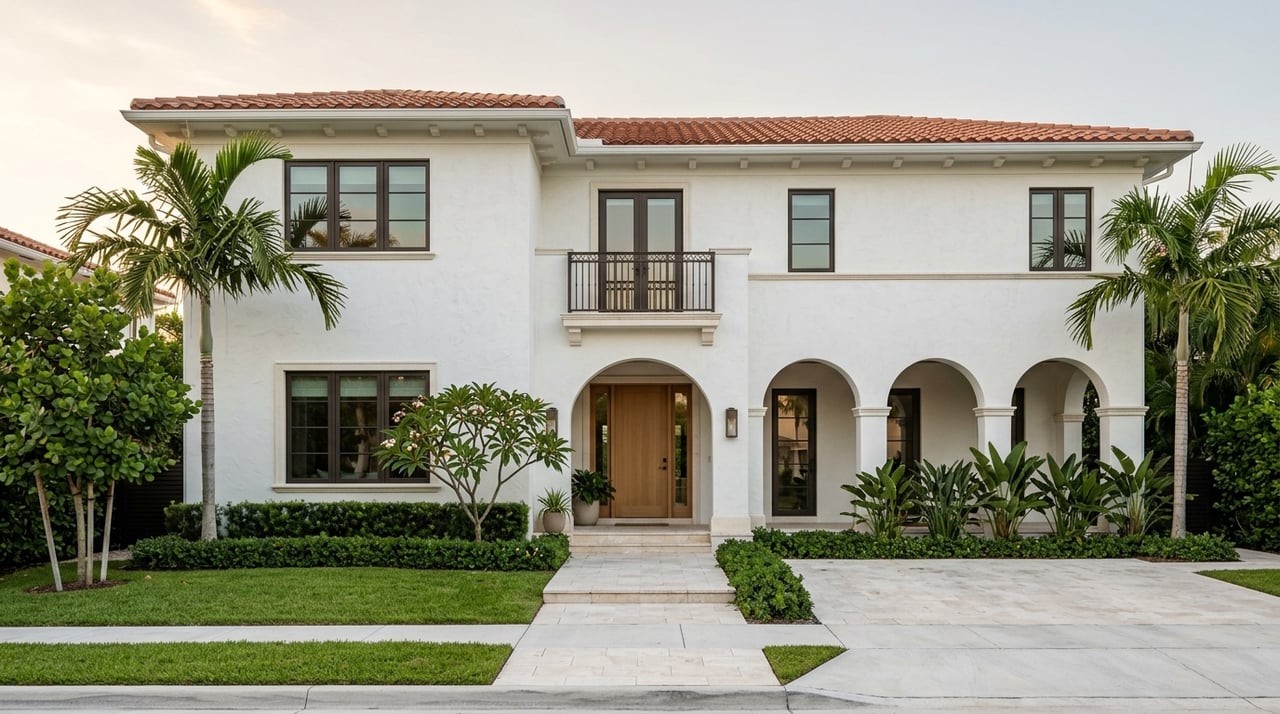
If you picture Palm Beach luxury homes as one uniform look, the reality is more interesting. The island’s architectural identity is defined by a refined mix of historic revival styles and modern forms, all shaped by climate, preservation, and a long tradition of design stewardship. If you are buying, selling, or simply trying to understand what gives Palm Beach real estate its distinct character, this guide will help you read the architecture with more confidence. Let’s dive in.
Palm Beach Architecture Has a Clear Identity
Palm Beach is not defined by a single architectural style. According to the Town of Palm Beach, Mediterranean Revival is the most popular style in town, but the island’s design guidance also notes that buildings often blend styles rather than follow one pure model.
That mix helps explain why Palm Beach feels so cohesive without looking repetitive. The town also reports more than 328 landmark properties, sites, and vistas under its historic preservation ordinance, which contributes to the island’s unusually consistent visual character.
Why Palm Beach Style Feels So Distinct
Palm Beach’s design language took shape in the early 20th century. Palm Beach County history credits Addison Mizner with leading the Mediterranean Revival movement in the 1920s, and the Preservation Foundation identifies Mizner, John Volk, Marion Sims Wyeth, Maurice Fatio, and Howard Major as key figures in defining Palm Beach style.
Their influence still shows up today in everything from rooflines and courtyards to the way homes connect indoor and outdoor living. Even newer estates often reflect this design lineage, whether directly or through more modern interpretations.
Mediterranean Revival Leads the Market
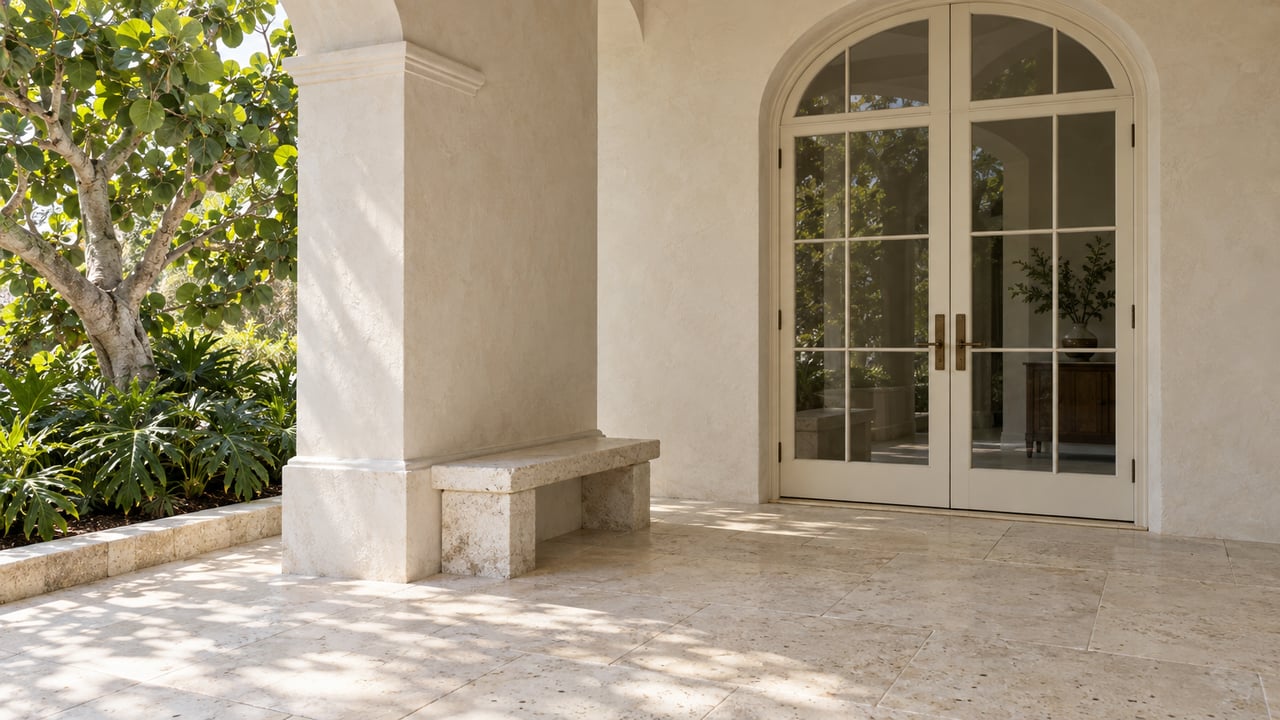
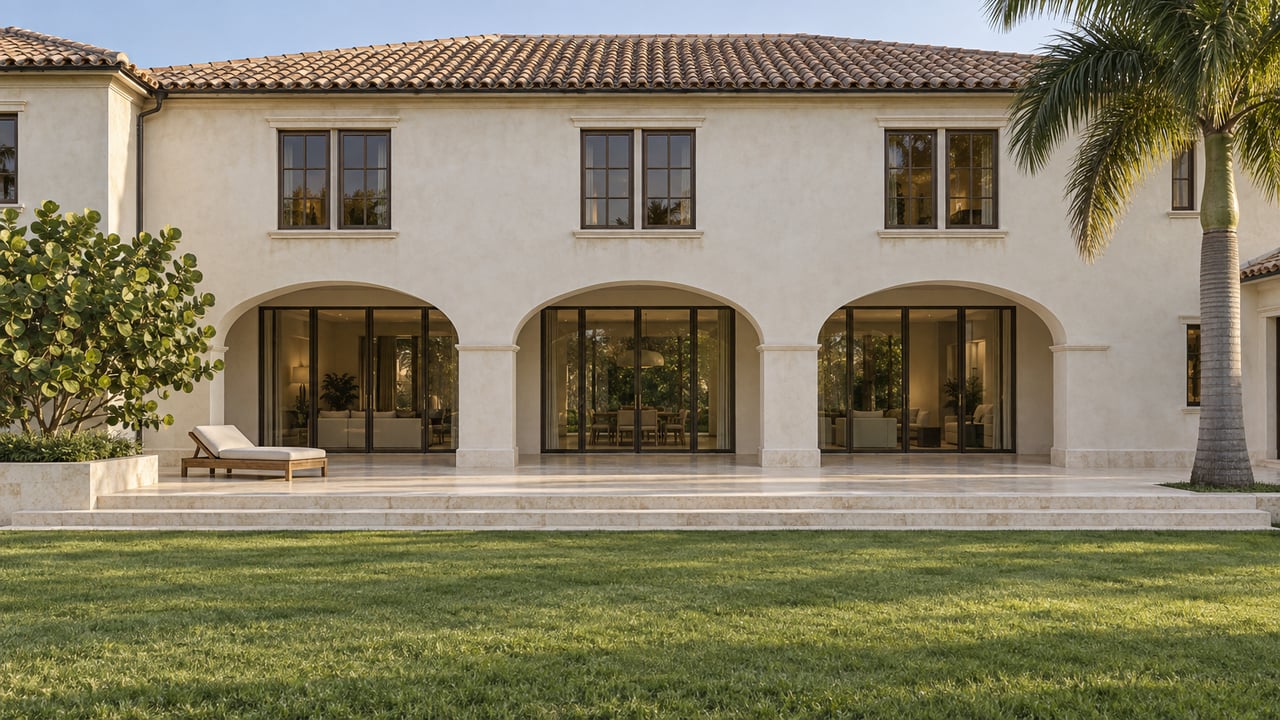
Mediterranean Revival remains the dominant and most recognizable luxury home style on Palm Beach Island. The Town of Palm Beach defines the category broadly, drawing from Spanish, Spanish Renaissance, Spanish-Italian, Latin American, Moorish, Romanesque, Venetian, Gothic, and Renaissance precedents.
In practical terms, that gives buyers and sellers a style language that feels layered, romantic, and well suited to the coastal climate. It is also one of the clearest visual signals of traditional Palm Beach luxury.
Key Features of Mediterranean Revival
You will often see these elements in Mediterranean Revival homes:
- Textured stucco exteriors
- Low-pitched roofs
- Red barrel tile roofing
- Wrought iron details
- Arches and arcades
- Courtyards and patios
- Terraces and balconies
- Loggias and sheltered outdoor rooms
County history adds that Mizner’s homes often included tiled roof towers, cloisters, paneled rooms, flowing floor plans, and fountains. Together, those features create homes that feel private, shaded, and designed for elegant indoor-outdoor living.
Why Buyers Respond to It
Mediterranean Revival tends to support a resort-like lifestyle. Courtyards, terraces, and loggias can create privacy while still making outdoor entertaining feel central to the home.
For many luxury buyers, that combination is the appeal. The architecture is expressive, but it also works hard in everyday living by softening sun exposure and creating transitions between interior rooms and outdoor space.
Palm Beach Regency Offers Formal Elegance
Palm Beach Regency is another important local style, with surveyed examples in town dating from 1923 to 1979. The Town of Palm Beach describes it as a symmetrical, often single-story style with flat roofs and strong classical influence.
Compared with Mediterranean Revival, Regency usually feels more composed from the street. It tends to present a more formal, balanced look while still supporting comfortable, open living patterns.
Key Features of Palm Beach Regency
Common characteristics include:
- Symmetrical facades
- Flat roofs
- Narrow or arched windows
- Classical entryways
- Stucco or painted plaster finishes
- Roofline urns
- Fine ironwork
The Preservation Foundation’s record for Royal Poinciana Plaza notes that architect John Volk chose Regency because it worked well with an open, modern plan. That helps explain why the style still appeals to buyers who want classical polish without overly compartmentalized interiors.
What Regency Says About Lifestyle
Regency homes often suit owners who prefer visual order and a quieter exterior expression. The symmetry and proportion can feel formal, but the interiors may still support flexible circulation and elegant entertaining.
For sellers, this style can also communicate timelessness. For buyers, it often offers a measured alternative to the more textured and expressive feel of Mediterranean Revival.
Modern and Contemporary Homes Have a Place
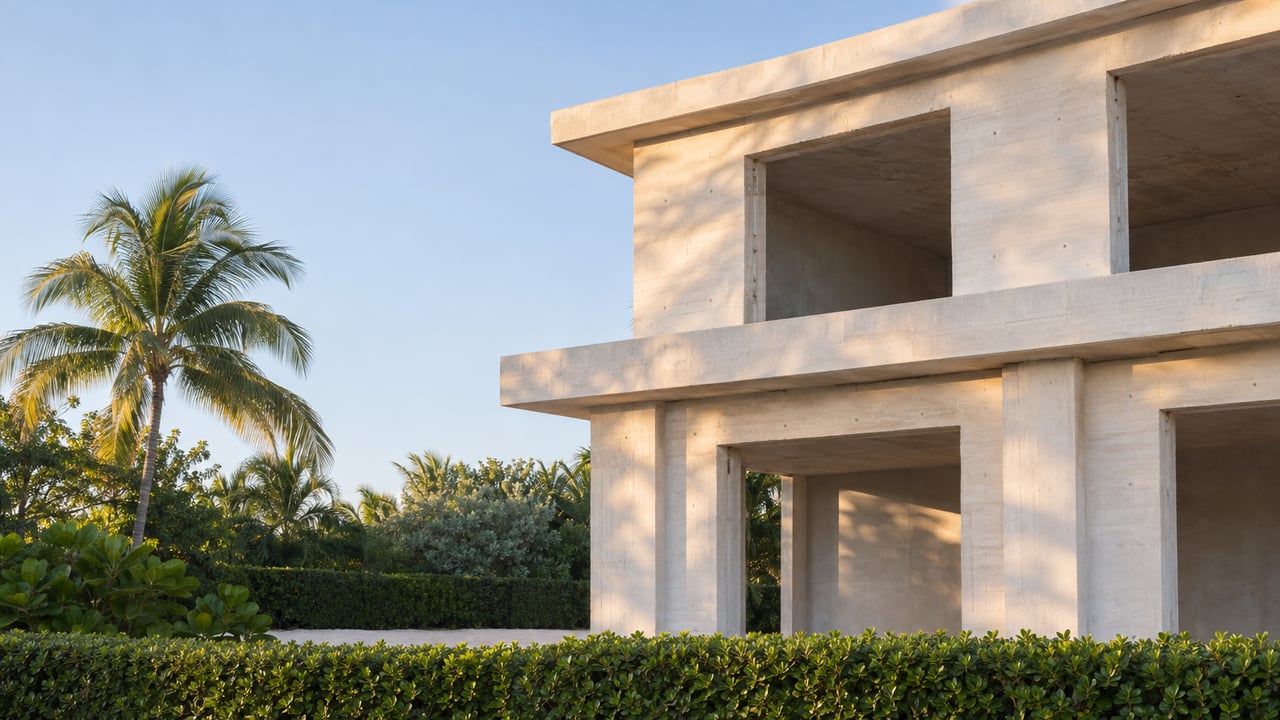
Palm Beach is not only about historic revival architecture. The town’s official housing survey recognizes Mid-Century Modern and Contemporary homes as part of the island’s housing stock.
That matters because many buyers assume modern homes are rare or out of character here. In reality, they are part of Palm Beach’s architectural story, especially in later twentieth-century and newer waterfront properties.
Key Features of Modern and Contemporary Homes
The Town of Palm Beach describes Mid-Century Modern and Contemporary homes as having:
- Low-pitched or flat roofs
- Overhanging eaves
- Larger windows or window walls
- Smooth stucco surfaces
- Breeze-block or decorative masonry screens
The town’s Landmarks Manual adds that many later twentieth-century examples feature sleek profiles, white facades, rectilinear forms, and expansive glass. These homes often feel brighter and more visually connected to the landscape.
Art Moderne and the Earlier Modern Chapter
Palm Beach also has a 1930s modern tradition. The Preservation Foundation describes Art Moderne as a form of Art Deco defined by simple geometric forms, smooth surfaces, horizontal lines, glass blocks, and nautical details such as porthole windows.
This history is important because it shows that modern design is not new to Palm Beach. It has local roots, even if today’s oceanfront estates often interpret modernism in a softer, more coastal way.
Newer Oceanfront Estates Blend Old and New
Many newer Palm Beach luxury homes do not follow a single historical style. Instead, they blend traditional coastal architecture with modern sophistication.
That approach fits the town’s broader design culture, where mixed styles are common when they are combined sensitively. On premier water-facing lots, newer estates often use larger expanses of glass and cleaner lines while still softening the overall look with details that feel consistent with Palm Beach.
Style Changes How a Home Lives
In Palm Beach, architecture affects more than curb appeal. Style shapes privacy, daylight, entertaining flow, and how the house connects to the site.
That distinction matters when you are evaluating a property. Two homes at a similar price point may deliver very different living experiences based on style alone.
Mediterranean Revival and Privacy
Mediterranean Revival homes typically favor courtyards, terraces, and loggias. That layout can create a more sheltered, intimate feeling, especially for buyers who value outdoor rooms and discreet entertaining.
The result is often a layered experience of the home. You move through shaded spaces, transitional openings, and private garden or pool areas rather than one continuous open volume.
Regency and Formal Balance
Regency homes usually feel more symmetrical and orderly. Porticos, balanced facades, and classical entry sequences can lend a sense of calm and structure.
That design rhythm often appeals to buyers who want elegance without excess. It can also create strong walls and room arrangements for art display and formal hosting.
Contemporary Homes and Views
Contemporary and modern homes generally prioritize open plans, broader glass expanses, and clearer view corridors. On oceanfront or lakefront lots, that can make daylight and scenery feel like part of the interior.
Marion Sims Wyeth said climate mattered in Palm Beach and that he tried to make the outside part of the house. That idea still defines many of the area’s most compelling homes, whether traditional or modern.
Preservation Can Shape Future Plans
Palm Beach architecture is closely tied to preservation. For landmark properties, the Town’s Landmarks Preservation Commission reviews changes and issues Certificates of Appropriateness.
That does not make landmark homes less desirable. It simply means that if you are buying or selling a significant property, architectural style may also affect renovation paths, exterior changes, and long-term stewardship.
What This Means for Buyers and Sellers
For buyers, style can be a shortcut to lifestyle fit. If you value shaded intimacy and resort-like entertaining, Mediterranean Revival may feel right. If you prefer formal symmetry and composed street presence, Regency may be a stronger match. If views, light, and openness lead your priorities, modern or contemporary homes may stand out.
For sellers, understanding a home’s architectural language can improve positioning. In Palm Beach’s luxury market, buyers are often responding not just to size or location, but to the way a property expresses history, privacy, and daily living.
In a market as design-aware as Palm Beach, architecture is part of value. Presenting that story clearly can help sophisticated buyers understand what makes a property distinct.
If you are preparing to buy, sell, or position a significant property in Palm Beach, working with a team that understands both architectural context and luxury-market strategy can make a meaningful difference. The Leavitt McIntosh Team brings deep local knowledge, discretion, and high-level execution to Palm Beach’s most important properties.
FAQs
Which architectural style is most common in Palm Beach luxury homes?
- Mediterranean Revival is the most popular and most recognizable architectural style in Palm Beach, according to the Town of Palm Beach.
Are Palm Beach luxury homes usually designed in one pure style?
- No. The Town of Palm Beach notes that mixed styles are common, as long as they are combined sensitively.
Are there modern homes on Palm Beach Island?
- Yes. The town’s housing survey includes Mid-Century Modern and Contemporary homes, and later examples often feature sleek profiles, larger glass planes, and bright interiors.
How does architectural style affect daily living in a Palm Beach home?
- Style influences privacy, natural light, entertaining flow, outdoor living, and how strongly the home connects to water views or landscaped spaces.
Do landmark rules affect Palm Beach luxury homes?
- Yes. For landmark properties, the Town of Palm Beach’s Landmarks Preservation Commission reviews changes and issues Certificates of Appropriateness.
Why does architecture matter when selling a luxury home in Palm Beach?
- In Palm Beach, architecture helps shape buyer perception, lifestyle fit, and property positioning, which can influence how a home stands out in the luxury market.