Picture this: you find a stunning Palm Beach waterfront estate, your dream boat in mind. The view is perfect, but will your vessel actually fit, clear the bridges, and dock safely through storm season? These are the details that turn a great property into the right property for you.
You want smooth daily access, long-term durability, and clean paperwork. You also want confidence that the dock, lift, and seawall match your boat and your lifestyle. In this guide, you’ll learn the essentials of depth, draft, lifts, seawalls, permits, and due diligence so you can buy with clarity. Let’s dive in.
Know Palm Beach waterways
Palm Beach waterfronts sit on tidal, saltwater environments that include the Atlantic Intracoastal Waterway and connected canals. Tides, boat traffic, and wakes influence how a dock performs day to day. Hurricanes and storm surge add stress that can shorten a seawall’s life if it is not properly designed and maintained.
Because conditions vary block by block, you need site-specific data. Depth at low tide, route constraints to open water, bridge clearances, and the build quality of the dock and seawall all factor into your decision.
Dock types at a glance
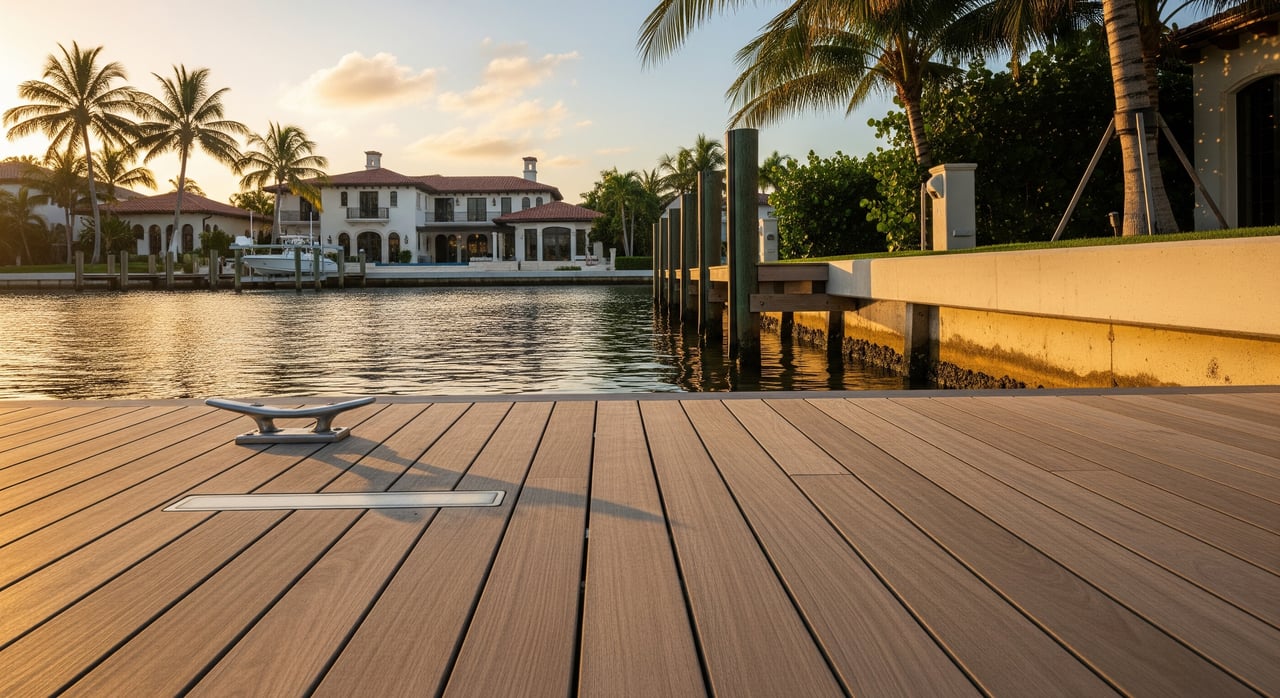
You will commonly see fixed pile-supported docks and floating docks. Fixed docks provide consistent access but need enough water depth at low tide for clearance. Floating docks rise and fall with the tide and can help where water levels vary.
Pilings, finger piers, and boat slips shape how many and what size vessels you can berth. Covered slips or boathouses, where allowed, are more tightly regulated. Always verify the property’s permits before you count on any structure.
Boat lifts and capacity
Residential lifts vary by design, including cable or hoist lifts, hydraulic systems, cradle lifts, and smaller floating or airbag systems. The critical factor is lift capacity. Match the lift’s rated capacity to your boat’s dry weight plus engines, fuel, and gear. Many residential lifts are sized for small to midsize boats. Heavy yachts often require purpose-built lifts.
Lift beam and side clearance also matter. Confirm your boat’s beam fits the cradle and the dock layout, and that you have safe maneuvering room with your typical wind and current.
Depth, draft, and tides
Depth needs to be measured relative to a standard low tide, such as mean low water. Your safe depth should exceed your vessel’s draft by a safety margin. A practical rule for smaller powerboats is 1 to 2 feet of under-keel clearance. Larger vessels may require more clearance.
Use nautical charts, recent surveys, or a private sounding from a marine contractor to verify actual conditions at the property. Many inland canals and private basins are shallow, while main ICW channels and direct-access sites are deeper. Always confirm depth at the dock and along your entire route.
Bridge and route checks
Access to inlets and open water may involve fixed or bascule bridges. Check vertical clearance at mean high water and the navigable width if your boat has a tall profile or wide beam. If a movable bridge is on your route, understand opening schedules and whether your typical boating times align.
Also assess currents, narrow channels, and turning basins you will use. A property that is perfect for a center console may not suit a tall sportfish or sailing yacht.
Materials and durability
Dock structures are commonly built with treated wood, hardwoods like ipe, aluminum framing, or composite decking. Seawalls range from reinforced concrete panels and caps to steel or vinyl sheet pile, timber bulkheads, or riprap slope protection.
Saltwater, UV exposure, marine borers, and corrosion drive maintenance cycles. Material choice affects lifespan and permitting. Concrete and steel systems often last longer than timber, but the quality of design and installation can matter even more.
Permits and approvals
Work in or over navigable waters typically involves multiple layers of review. Federal oversight may apply through the U.S. Army Corps of Engineers. At the state level, Florida’s Department of Environmental Protection often reviews shoreline work and sovereign submerged lands leases. Local jurisdictions, including the Town of Palm Beach and nearby cities, issue building and environmental permits and may set design standards.
Private rules can also apply. HOAs or neighborhood covenants often regulate dock design, the number of slips, guest mooring, and commercial activity. Start permit conversations early to avoid surprises, especially if you are considering dredging or adding a lift.
Environmental review basics
Projects are often reviewed for impacts to seagrasses, protected species, and water quality. A seagrass survey or mitigation may be required. Dredging for deeper slips is heavily regulated and is often the most challenging and costly step to approve.
Permit timelines can vary. Simple repair work might be expedited. New seawalls, structural changes, covered slips, or dredging can take months. After storms, emergency repairs may get temporary authorization, with follow-up permits required.
Seawall health and lifespan
Seawalls protect property from waves, wakes, and surge, but they do wear over time. Common issues include corrosion of steel, concrete spalling, timber decay, and tieback failure. Undermining at the base and settlement can cause bulging or leaning.
Plan for annual inspections and post-storm checks. Look for cracks, gaps behind the wall, cap damage, exposed reinforcement, or blocked weep holes. Maintain drainage, replace sacrificial anodes on metal elements, and address localized damage quickly. Good records of repairs, permits, and warranties help during due diligence and resale.
Dredging and sediment
Some private docks need periodic dredging to maintain approach depth. Dredging requires permits and can be costly, depending on disposal needs and environmental constraints. Ask for the property’s dredging history, including dates, volumes, and permits.
Confirm whether the property participates in public or private dredging programs and whether there is guaranteed access to a deeper channel. Without a reliable approach, your dock may not function as intended.
Insurance and flood context
Dock, lift, and seawall coverage can vary across homeowners policies and marine insurance. Flood insurance focuses on the building’s elevation and flood risk. Seawall condition can influence your overall vulnerability to flooding, but it is usually not a standalone flood coverage.
Discuss coverage limits, exclusions, and deductibles with your insurer. Clarify whether preexisting conditions or prior claims affect insurability or premiums. Ask for the property’s elevation certificates and any relevant floodplain documentation during due diligence.
Pre-offer buyer checklist
Use this checklist as part of your evaluation. Many items can be verified before an offer or as a contingency.
- Vessel compatibility
- Confirm your boat’s dry weight, draft, and beam match the lift rating, cradle size, and dock clearances.
- Verify vertical clearance along your route, including bridges at mean high water, and ensure navigable width fits your beam.
- Water depth and access
- Obtain recent sounding or bathymetry at the dock and approach, measured to a low-tide datum.
- Ask for dredging history, existing permits, and eligibility for ongoing dredging projects.
- Drawings and permits
- Request as-built drawings, recorded permits, elevation certificates, and any state leases or easements tied to the dock or seawall.
- Seawall condition
- Note age, repair history, tieback condition, toe protection, and signs of settlement or undermining.
- Lift specifics
- Record the manufacturer, model, rated capacity, install date, maintenance history, and permit status.
- Legal and regulatory
- Check for HOA or covenant rules that govern docks, lifts, or use. Confirm riparian rights and any recorded easements.
- Insurance
- Confirm coverage for dock, lift, and seawall with your insurer. Review claims history and its impact on premiums.
- Storm resilience
- Ask about performance in recent hurricanes and any post-storm repairs, including permitting and documentation.
- Professional review
- Engage a licensed marine contractor or structural engineer for a property-specific inspection.
What to request from the seller
Gather records that prove condition and compliance. These documents inform pricing, negotiation, and future permitting.
- Permit history and any state submerged land leases
- Recent marine survey or depth sounding
- Dates and invoices for seawall, dock, and lift repairs or replacement
- Warranties and service contracts for the lift or dock systems
- Insurance claims history related to marine structures
Contractor selection and costs
Costs vary widely and depend on material, length of the structure, site access, depth of work, dredging needs, and any required environmental mitigation. Be skeptical of ranges that are not site-specific.
Seek multiple quotes from licensed marine contractors experienced with Palm Beach County permitting. Ask for references and proof of insurance and bonding. Verify that prior repairs were permitted and closed, since unpermitted work can complicate future approvals and closings.
Who to contact for permits
Plan to coordinate across multiple agencies. In addition to your municipality’s building or environmental department, projects may involve the U.S. Army Corps of Engineers and the Florida Department of Environmental Protection. Palm Beach County’s environmental resources staff can also be part of the process.
If your property is in the Town of Palm Beach or the cities of West Palm Beach, Boca Raton, or Delray Beach, call the respective building or engineering departments early. If submerged state lands are involved, confirm whether a lease or easement is required. Keep all communications and approvals in your transaction file.
The bottom line for buyers
The right Palm Beach waterfront property should fit your vessel today and be resilient for years to come. Focus on measured low-tide depth, confirmed lift capacity, clear route constraints, and a seawall with documented care. Strong permitting and records are as important as the view.
If you want a private, expert sounding board as you evaluate a specific property, connect with The Leavitt McIntosh Team. You will get measured, discreet guidance grounded in local knowledge and high-stakes execution.
FAQs
How do I check dock water depth in Palm Beach?
- Verify depth at a low-tide datum using nautical charts or a recent sounding, then confirm under-keel clearance that exceeds your boat’s draft by a safe margin.
Do I need permits to replace a dock or seawall?
- Yes in most cases. Expect reviews by local agencies, the Florida DEP, and possibly the U.S. Army Corps of Engineers, with extra scrutiny if dredging is involved.
What seawall issues should I look for when buying?
- Look for bulging or leaning, cracks, missing or damaged caps, exposed steel, blocked drains, and signs of undermining or settlement, then review repair records.
Can I add or upsize a boat lift at a home?
- Possibly, if the dock structure, permits, and site allow it. Verify lift capacity, beam clearances, and whether modifications will trigger new permits.
How do bridges affect my route to the ocean?
- Check vertical clearance at mean high water and channel width for your beam, and confirm opening schedules if a bascule bridge is on your route.
Does flood insurance cover docks and seawalls?
- Coverage varies. Home and marine policies may handle some dock and lift damage, while flood insurance focuses on building elevation and flood risk.
How often should a seawall be inspected in Palm Beach?
- Inspect annually and after major storms. Maintain drains and anodes, and address small issues promptly to avoid progressive failure.