You can change a kitchen in a month. Changing a dock, seawall, or elevation on the water in Palm Beach can take months and directly shape what your property is worth. If you own, plan to sell, or are evaluating a purchase on the island or along Lake Worth Lagoon, the rules that govern waterfront improvements matter as much as location and view. In this guide, you’ll see how key regulations influence price, timelines, and resale, plus the due diligence steps that protect your upside. Let’s dive in.
Why waterfront rules drive value
Waterfront value in Palm Beach is not just view and frontage. It is also what you can legally build, how fast you can permit it, and the long-term costs tied to flood, seawall, and navigation realities. Buyers pay premiums for certainty and capacity. Sellers capture stronger outcomes when they can prove compliant, transferrable entitlements for docks and shore protection.
Who sets the rules
Town of Palm Beach
The Town regulates docks, marginal docks, lateral setbacks, and accessory structures under Chapter 62 and zoning provisions. The code establishes clear numeric limits that determine dock length and width, lateral setbacks, lighting, and proximity to channels. These local rules are often the first screen for what is possible on a given lot. You can review the Town’s adopted marine-structure standards in the ordinance materials for Chapter 62 updates, including Ordinance No. 009-2024, which detail projection and width limits and setbacks. See the Town’s ordinance packet for current text and diagrams in the Chapter 62 update materials.
State of Florida (FDEP and Board of Trustees)
Florida controls state-owned submerged lands and the Coastal Construction Control Line on the oceanfront. If a proposed dock extends beyond privately owned bottom, you typically need a state authorization or a submerged-land lease before the Town issues a local permit. Learn how sovereignty-submerged lands and leases work in the state’s Division of State Lands guidance.
U.S. Army Corps of Engineers
The Corps regulates work in navigable waters and wetlands under Sections 10 and 404. Docks, seawalls, dredging, and any work near federal channels may need a Department of the Army authorization or coverage under a regional general permit. Corps jurisdiction and pierhead lines can limit how far a dock may extend. See the Jacksonville District’s regulatory resources for Florida.
FEMA and insurance
Flood zones, base flood elevations, and the National Flood Insurance Program shape design and carrying costs. West Palm Beach maintains public flood information, including map lookups and community rating details, that buyers and insurers use to price risk. Explore local flood guidance on the City of West Palm Beach flood information page.
Environmental overlays
Aquatic preserves, seagrass, and manatee-protection areas add design limits and review. Private residential docks can be allowed under specific criteria, but shading and platform-size limits often apply. Florida’s aquatic preserve statutes outline these constraints. Review Chapter 258 in the Florida Statutes on aquatic preserves.
Dock dimensions that set boat capacity
For many Palm Beach buyers, boat size and berthing are a key value driver. The Town’s code puts firm bookends on what a residential dock can be:
- One pier or landing dock per lot as an accessory structure.
- Maximum projection of approximately 150 feet from land or the mean high-water line.
- Maximum gangway and terminal platform widths generally 10 feet.
- Minimum 25-foot lateral setbacks from lines projected from side property lines into the water.
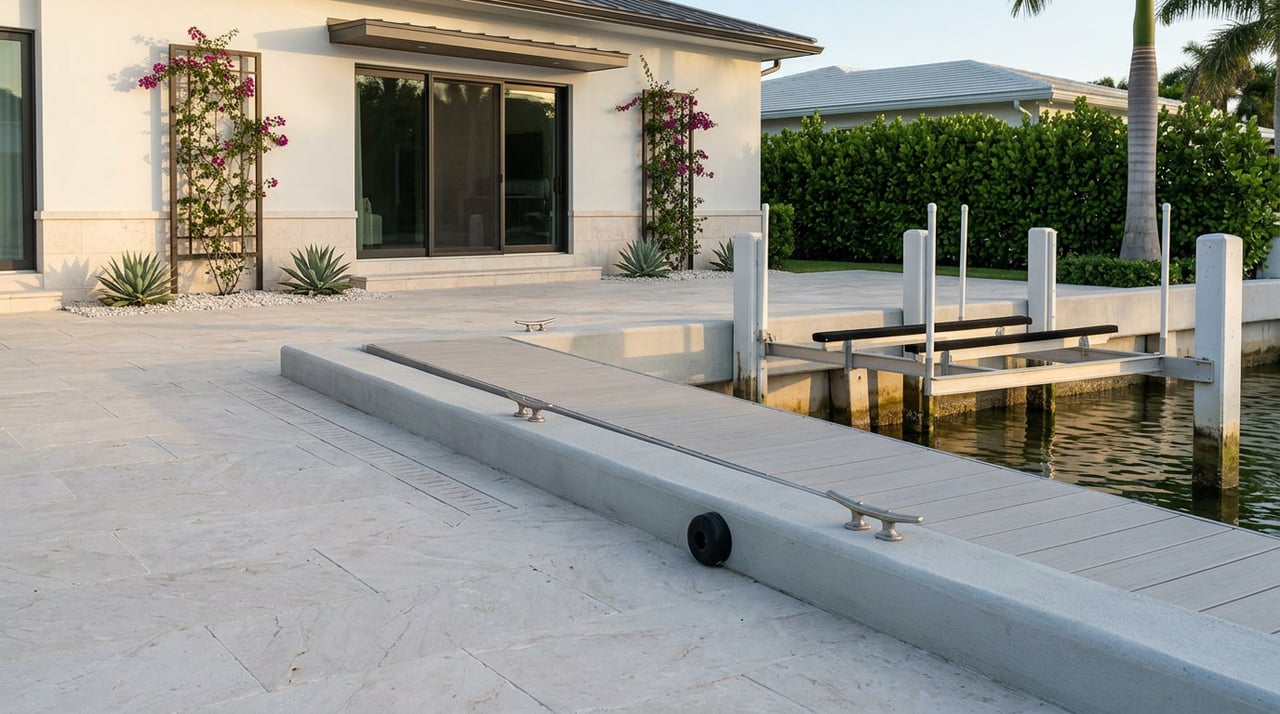
- Marginal docks that run parallel to a seawall may project only about 6 feet from the wall and are limited by frontage percentage.
These local numbers are more than technicalities. They set the maximum legal berth length and configuration and can rule out larger vessels. Channel and pierhead line restrictions can further shorten what is buildable in front of some parcels. The Town’s ordinance packet provides the governing details for these limits in the Chapter 62 update materials.
Seawalls: cost, limits, and timing
Seawalls protect your land, but they carry maintenance obligations, permitting rules, and schedule risk that buyers price into offers.
- Repairs versus replacement. Many state and Corps programmatic authorizations allow repair or restoration of an existing seawall within a narrow waterward tolerance, often described as within roughly 18 inches of the prior wet face in permit materials. Moving a wall seaward usually triggers higher-level review and can require mitigation or be denied. See the programmatic permit attachment for typical thresholds in this SPGP reference document.
- Owner responsibility. The upland owner typically bears the cost of seawall repair and replacement. Local code enforcement records show failing seawalls can lead to enforcement action, required permits, and compliance timelines. Palm Beach County hearing agendas illustrate how municipalities address failures, as shown in this code compliance docket.
- Market effect. A near-term seawall replacement is a known expense that many buyers deduct from price or reserve for in contingencies. A recent structural report and contractor estimate help quantify exposure.
Flood, sea-level, and resilience factors
Physical risk is changing the value equation along Lake Worth Lagoon and the oceanfront.
- Sea-level rise and nuisance flooding. NOAA and local vulnerability work document rising minor tidal flooding over time. Buyers and insurers increasingly model near-term exposure and long-term adaptation needs, such as mechanical elevations or seawall improvements. NOAA’s datasets are a common starting point for scenario planning; see this NOAA data resource.
- FEMA flood zones and premiums. High-risk coastal flood zones typically mean higher annual premiums and stricter elevation requirements. Local participation in the Community Rating System can moderate, but not eliminate, exposure. The City of West Palm Beach maintains flood program information and maps used by underwriters and buyers.
- Oceanfront CCCL. On Atlantic parcels, the Coastal Construction Control Line adds state review that can affect elevation, siting, and design of improvements above the beach.
Navigation depth and dredging access
Your boat draft is only as good as the maintained depth between your dock and open water. County, state, and federal dredging and sand-trap maintenance at the Lake Worth Inlet affect navigation depth and shoaling patterns. Where dredging is routine and channels are maintained, waterfront parcels retain stronger boating access value. Where channels shoal, usable berths can become seasonal or impractical for larger vessels. Palm Beach County project summaries outline this interplay; see this County agenda item on inlet and sand-trap work.
How rules influence price and buyer behavior
- Dock geometry caps boat size. Numeric limits on projection, width, and side setbacks reduce the pool of buyers who require deep-water access for larger yachts. This can compress pricing for otherwise prime frontage when large-boat capacity is not feasible. The Town’s Chapter 62 materials set these constraints.
- Permits equal marketability. A dock with a clear, transferrable state authorization and local permit history is more attractive to lenders, insurers, and buyers than an unpermitted structure. The state outlines submerged-land lease requirements in its Division of State Lands guidance.
- Seawall condition is price-sensitive. Anticipated replacement costs are commonly deducted from offers, and enforcement histories can influence timing and terms. Example dockets, like this county code compliance agenda, show the stakes for deferred maintenance.
- Flood and insurance alter carrying costs. Higher premiums and elevation requirements reduce net cash flow for investors and narrow the resale pool for some end users. Local flood resources, including West Palm Beach’s program page, inform underwriting.
- Multi-agency approvals add friction. Projects requiring Town, FDEP, and Corps coordination add time and uncertainty. Some buyers will discount or pass on assets that depend on longer permit timelines.
Buyer and seller playbook
Use this streamlined checklist to protect value and reduce surprises. Keep copies of anything you obtain for your disclosure package or offer review.
- Pull the Town file. Request the permit history for docks, seawalls, and any dredging or encroachments from the Town’s building department. The Town permit portal is a good first stop.
- Verify state authorization. Confirm whether the dock sits over private or state-owned bottom and whether a submerged-land lease, easement, or authorization exists. Start with FDEP’s sovereignty-submerged lands FAQ.
- Check Corps records. Search the Jacksonville District’s regulatory page for any required Department of the Army permits affecting the parcel, including pierhead line or channel constraints. Use the USACE Florida regulatory page.
- Inspect the seawall and dock. Order a structural report and a marine-contractor assessment covering condition, remaining life, and likely permit path for repair or replacement. Programmatic permit materials like this SPGP attachment outline typical tolerances.
- Confirm flood status and elevation. Pull a FEMA FIRMette, any elevation certificate on file, and local floodplain permit history. The West Palm Beach flood page links to maps and guidance.
- Screen for environmental overlays. Determine if the shoreline lies in an aquatic preserve, includes seagrass or manatee zones, or sits seaward of the CCCL. Florida’s aquatic preserve statutes outline added criteria.
- Validate navigation access. Confirm the nearest maintained channel, dredging schedules for the Lake Worth Inlet and sand traps, and any local shoaling reports. County project summaries like this agenda item provide context.
- Escalate complex title questions. Where submerged-land boundaries, historic easements, or public-trust issues are unclear, discuss with counsel. Florida has case law on submerged-land disputes, and specialized guidance can prevent costly delays.
What this means for your sale or purchase
If you plan to sell, assemble a clean package: Town permit history, state and Corps approvals, recent seawall and dock reports, flood information, and any navigation documentation. Proving compliance and capacity shortens diligence, expands the buyer pool, and supports premium pricing.
If you plan to buy, validate the future you are paying for. Confirm whether your intended vessel fits within legal dock geometry, how long key permits might take, and what near-term seawall or elevation work will cost. Weight these items against carry, timing, and your hold period.
When details can move millions, precision pays. If you would like a confidential assessment of how these rules affect your specific property or a targeted plan to market compliant capacity to the right buyers, connect with The Leavitt McIntosh Team.
FAQs
Can you extend a Palm Beach dock to fit a larger boat?
- Not automatically. Town limits on projection, width, and side setbacks, plus state and Corps rules, set maximum length and configuration. Projects that exceed prior permit footprints often require state and Corps approvals before the Town will issue a permit. See the Town’s Chapter 62 materials.
Who pays for a failing seawall in Palm Beach, and can you move it seaward?
- The upland owner typically pays. Repair in the same footprint is often allowed within a narrow waterward tolerance under programmatic permits. Moving the wall seaward usually triggers higher review and can be denied or require mitigation. See this SPGP attachment for typical thresholds.
Do aquatic preserves stop you from having a dock?
- Not necessarily. Private residential docks can be permitted under specific criteria, but design standards are stricter to protect submerged resources, including shading limits and platform-size restrictions. Review Florida’s aquatic preserve statutes.
How do flood zones and sea-level rise affect property value in Palm Beach?
- Higher-risk zones often bring higher premiums and stricter building elevations, which raise carry and narrow the buyer pool. Buyers also weigh nuisance flooding and longer-term adaptation costs using data from resources like NOAA and local flood program pages.
Who needs to approve a new dock or major modification in Palm Beach?
- The Town reviews local code compliance. If the structure affects state-owned submerged lands or navigable waters, Florida’s Division of State Lands and the U.S. Army Corps may also need to authorize the work. See FDEP’s submerged-lands FAQ and the USACE Florida regulatory page.