Wondering whether a Palm Beach condo or townhome is the better fit for your next move? In this market, the answer often has less to do with how a property looks from the street and more to do with ownership structure, maintenance responsibility, reserve funding, and the lifestyle you want day to day. If you are weighing privacy against service, or convenience against control, this guide will help you sort through the real decision points. Let’s dive in.
Why condos and townhomes fit Palm Beach
Palm Beach and the broader West Palm Beach, Boca Raton, and Delray Beach corridor offer a very specific coastal setting. Palm Beach Island is a barrier island with 12.1 miles of Atlantic coastline and 15.9 miles of Intracoastal frontage, and the Town notes that it is constantly affected by wind, waves, and sand movement.
That geography helps explain why condos and townhomes play such a large role in the local housing mix. In areas where land is limited and exterior upkeep can be demanding, many buyers are drawn to homes that offer a more manageable ownership experience.
The surrounding markets reinforce that appeal. West Palm Beach’s downtown waterfront includes about 767 acres and nearly 9,000 residential units, while Delray Beach’s municipal beach is highly accessible and stretches one and one-half miles at the east end of Atlantic Avenue. Across these communities, attached living options often align well with a coastal, lock-and-leave lifestyle.
Condo vs townhome: the real difference
Many buyers assume a condo and a townhome are easy to tell apart. In practice, the legal structure matters more than the exterior design.
In Florida, a condominium is created under Chapter 718. You own your individual unit and also hold an undivided share in the common elements, with the association generally responsible for maintaining those common elements unless the governing documents assign certain limited responsibilities differently.
By contrast, Chapter 720 governs homeowners’ associations. Florida defines an HOA as a corporation made up of parcel owners in a community where membership is mandatory, and unpaid assessments can become a lien on the parcel.
The key takeaway is simple: two attached homes may look very similar but operate under very different rules. That can affect dues, maintenance obligations, reserves, rental policies, and your long-term costs, so it is important to verify the declaration and title records rather than rely on the marketing label alone.
What condo living often offers
In the Palm Beaches, luxury condos often compete on service, staffing, and shared amenities. Depending on the building, that can include concierge support, valet, housekeeping, fitness facilities, pools, wellness spaces, social rooms, and in some cases marina access.
This type of setup can work especially well if you value convenience and want fewer day-to-day responsibilities. For seasonal owners and frequent travelers, the appeal is often the ability to arrive, settle in quickly, and leave without managing extensive exterior upkeep.
Condo living can also simplify the ownership experience in a coastal setting where building maintenance is ongoing and important. That does not remove financial responsibility, but it often centralizes many building-related functions through the association.
What townhome living often offers
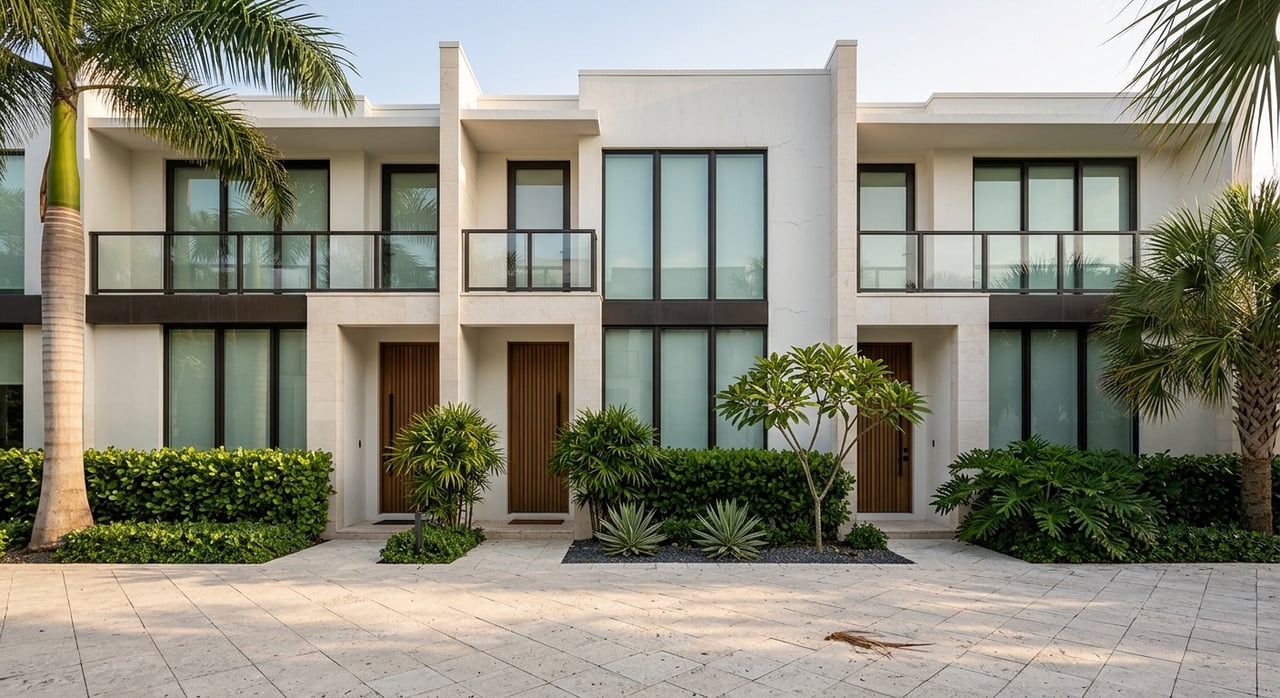
Luxury townhomes in the broader Palm Beach market tend to emphasize a more private, house-like experience. Features often include private elevators, rooftop terraces, private plunge or cocktail pools, garages, and layouts designed for indoor-outdoor entertaining.
For many buyers, the draw is a greater sense of separation and personal space. You may still benefit from a more manageable footprint than a large single-family estate, while keeping features that feel more residential and self-contained.
In practical terms, townhomes often appeal to buyers who want more privacy and autonomy than a typical condo building offers. That can be especially attractive if your priority is outdoor living, private circulation, or a layout that feels closer to a standalone home.
Service versus privacy
One of the clearest ways to compare these options is through lifestyle. Condos often lean toward staffed convenience and shared resort-style amenities, while townhomes often lean toward privacy, personal outdoor space, and a more independent feel.
Neither option is inherently better. The better choice depends on whether you place more value on support and shared services, or on separation and private-use features.
If you travel often or want a highly streamlined experience, a condo may check more boxes. If you want a residence that feels more like a private home without taking on the full demands of a large estate, a townhome may be a stronger fit.
Understand dues and ownership costs
Monthly dues are an important part of the decision and should be evaluated carefully. They are generally paid separately from your mortgage and can vary widely depending on the property, service level, and maintenance responsibilities.
In communities with associations, those dues typically help fund shared expenses such as landscaping and maintenance. In condo communities, associations often take on more responsibility for shared structures and roofs, which can change how costs are allocated compared with other ownership setups.
It is also important to remember that assessments are not optional. Unpaid dues can trigger collection efforts and may even lead to foreclosure, so buyers should understand both the current monthly obligation and the possibility of future increases.
Why reserves matter in older buildings
For Palm Beach buyers, reserve funding has become a central issue, especially in older waterfront buildings. Florida’s current condo safety framework requires milestone inspections for residential condominiums and cooperatives with three or more habitable stories, generally at 30 years of age and every 10 years after that, or at 25 years in some local jurisdictions.
Florida also requires residential condo associations for buildings three stories or higher to complete a structural integrity reserve study every 10 years. For budgets adopted on or after January 1, 2025, the required reserves may not be waived.
If a reserve study shows that funding is insufficient, associations may need to raise assessments or obtain financing. For buyers, that makes reserve strength and building condition more than a line item in a budget. They are a meaningful part of your ownership risk.
Coastal conditions change the equation
This issue carries extra weight in Palm Beach because of the environment itself. The Town of Palm Beach states that the island is constantly affected by wind, waves, and sand movement.
That means exterior systems, storm resilience, and long-term maintenance are not abstract concerns. They directly affect how buildings age, how repairs are planned, and how associations need to budget over time.
In a coastal market, a lower monthly fee does not always mean a better financial picture. A property with strong documentation, realistic reserves, and clear maintenance planning may offer more stability than one with dues that appear lower at first glance.
Questions to ask before you buy
Before choosing a condo or townhome, focus on the issues that shape your actual ownership experience. The most helpful questions are often the least glamorous.
- Is the property legally a condominium or an HOA parcel?
- What do the monthly dues cover?
- Who is responsible for the roof, exterior, windows, and hurricane protection?
- Have milestone inspection and reserve requirements already been addressed?
- Is there a current reserve study, and what does it show?
- Are there any pending special assessments or major repairs under discussion?
- Does the lifestyle lean more toward staffed service or private living?
These questions usually reveal more than the word “condo” or “townhome” ever could. They help you compare options based on obligations, exposure, and fit.
Which buyers often prefer each option
In the Palm Beach luxury market, condos often suit seasonal owners, frequent travelers, and buyers who want a lock-and-leave residence with views, staffing, and minimal exterior maintenance. They can also appeal to those who prefer a professionally managed environment with a high level of service.
Townhomes often suit buyers who want more interior space, larger terraces, private elevators or garages, and a residence that feels closer to a single-family home. They may also be a better fit if privacy and outdoor entertaining rank high on your list.
Of course, every property is different. The strongest decisions come from matching the legal structure, financial framework, and service level to the way you actually plan to live.
Making a confident Palm Beach decision
In Palm Beach, the condo versus townhome question is really about clarity. You are not just choosing a floor plan or façade. You are choosing a structure of ownership, a level of responsibility, and a style of living.
When you evaluate a property through that lens, the right fit becomes easier to spot. A well-chosen condo can deliver ease and service in a coastal setting, while the right townhome can offer privacy and a more residential feel without the full burden of a large standalone home.
If you are comparing high-end condos or townhomes in Palm Beach County, working with a team that understands both the local market and the fine print can make the process far more efficient. For discreet guidance on Palm Beach luxury property, connect with The Leavitt McIntosh Team.
FAQs
What is the difference between a Palm Beach condo and a townhome?
- In Palm Beach, the biggest difference is often the legal ownership structure rather than the appearance of the home. A condo typically falls under Florida condominium law, while a townhome may be part of an HOA community with different rules on maintenance, dues, and ownership responsibilities.
What do condo or HOA dues usually cover in Palm Beach?
- Dues vary by property, but they commonly help pay for shared expenses such as maintenance and landscaping. In condo communities, dues often also support shared building components and services, which is why it is important to review exactly what the association budget covers.
Why are reserve studies important for Palm Beach condos?
- Reserve studies help show whether an association is setting aside enough money for major future repairs. In older coastal buildings, this matters because insufficient reserves can lead to higher assessments or financing needs later.
Do older Palm Beach condo buildings need inspections?
- Yes, certain residential condominiums and cooperatives with three or more habitable stories are subject to Florida milestone inspection requirements based on the age of the building and, in some areas, local timing rules.
Is a townhome more private than a condo in Palm Beach?
- It often is, but not always. In the Palm Beach market, townhomes commonly emphasize private entrances, rooftop terraces, private elevators, and a more house-like layout, while condos more often emphasize shared amenities and staffed services.
What should you review before buying a Palm Beach condo or townhome?
- You should review the declaration, association budget, reserve study, insurance summary, recent inspection reports, and any pending special assessments. These documents help clarify maintenance responsibility, financial exposure, and the overall ownership structure.