A well-priced unit in a well-located building is no longer enough to guarantee a smooth condo closing on Palm Beach Island. As of this month, the thing standing between a signed contract and a funded loan is more likely to be a missing reserve study than a low appraisal or a picky buyer. Two changes landed within days of each other in early August, and together they mean the building's paper trail now carries more weight in a Palm Beach condo sale than it has at any point since the state rewrote condo law after Surfside.
The assumption most sellers are working from is that more disclosure rules mean more protection for everyone, buyer and seller alike, spread evenly across South Florida. Palm Beach County's inspection reporting has a documented gap compared with Broward and Miami-Dade. But the Town of Palm Beach runs its own building department, so county reporting figures do not establish an individual Palm Beach Island building's inspection status.
Two Developments, Two Days Apart
On August 1, 2026, the Florida Legislature's watchdog office, the Office of Program Policy Analysis and Government Accountability, released its first statewide accounting of how the post-Surfside inspection law is actually being enforced. The report also identifies a reporting gap in Palm Beach County. Local building officials in Palm Beach County failed to submit their 2025 inspection data to the state 44 percent of the time, a far higher non-reporting rate than Broward's 23 percent or Miami-Dade's 21 percent. Those figures describe Palm Beach County reporting; they do not establish the inspection status of a specific Palm Beach Island building.
Two days later, on August 3, 2026, Fannie Mae and Freddie Mac retired the Limited and Streamlined Review pathways that had let many condo buyers close on a loan without much scrutiny of the association behind the unit. That pathway had covered roughly 40 percent of condo project reviews nationally according to the Community Associations Institute. From that date forward, most established buildings with more than ten units go through Full Review, meaning the lender examines the association's budget, reserve study, delinquency rate, insurance, and minutes with the same seriousness it once reserved for the borrower's own finances. The underlying inspection statute, Florida Statute 553.899, is enforced locally, and the Town of Palm Beach runs its own building department separate from the county's unincorporated-area program, which is one more reason a seller should confirm status directly with the town rather than assume county-wide reporting covers the island.
Put those two dates together and the practical point is clear: federal lenders are scrutinizing association records more closely just as local officials continue enforcing the inspection statute. A complete file can help address lender questions before they delay a closing.
What Full Review Actually Checks
The shift from Limited Review to Full Review isn't cosmetic. Lenders are now expected to confirm specific figures before they will fund a conventional loan on a unit in a project with more than ten residences.
| What changed | Effective date |
|---|---|
| Limited/Streamlined Review retired for established projects with more than 10 units | August 3, 2026 |
| GoverningDocs says a reserve study must reflect the highest recommended funding level, not a baseline estimate | August 3, 2026 |
| Condo-Approval Professionals say a master-policy per-unit deductible above $50,000 can make the project non-warrantable | July 1, 2026 |
| Bennett Capital Partners Mortgage Brokers says the reserve funding minimum rises | January 4, 2027 |
A building whose budget still relies on a baseline reserve estimate, or whose master insurance carries a deductible above the new cap, risks losing conventional financing eligibility for every unit inside it, not just the one under contract. Full Review also looks at how many owners are behind on assessments, since a building with a high delinquency rate signals the same funding stress a thin reserve study does. That is the detail sellers tend to miss. It isn't a personal underwriting problem. It's a building-wide one, and it follows the association, not the buyer.
The Island's Own Split Screen
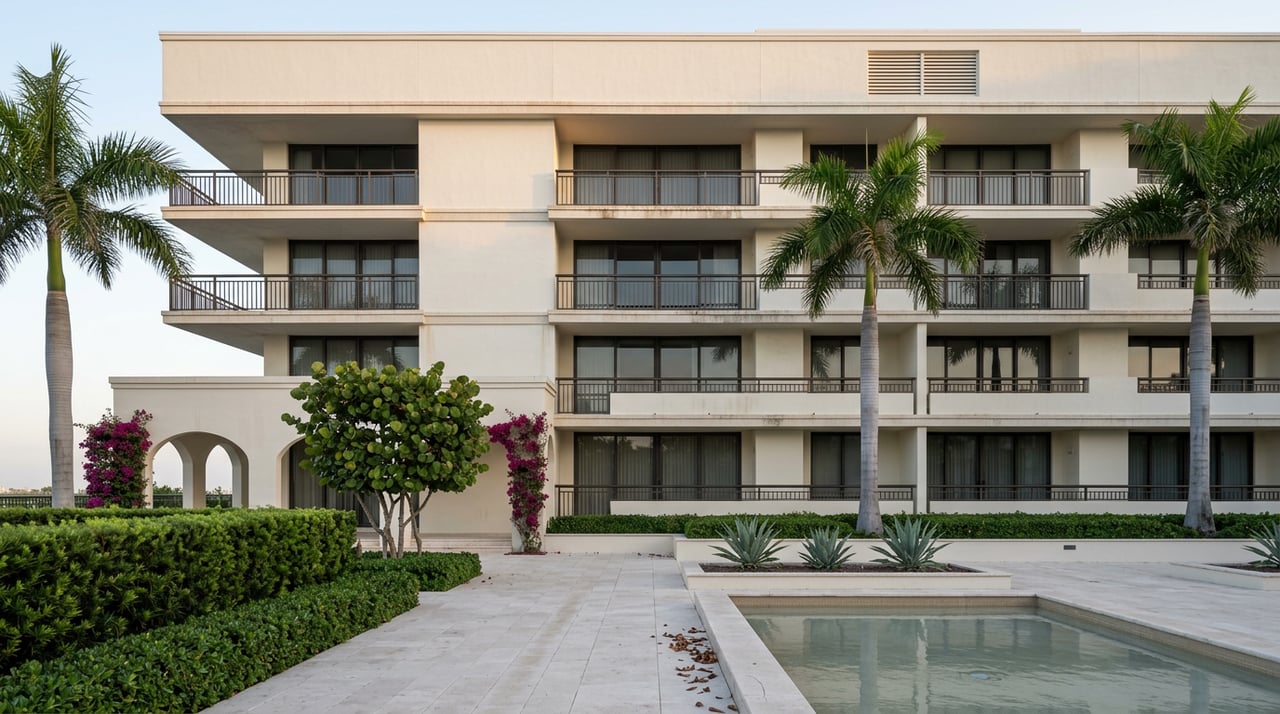
Palm Beach's South End offers a useful before-and-after. The stretch running from Sloan's Curve to Lake Worth Road holds 24 condominium buildings. Most were built in the 1970s and 1980s.
Two of those buildings, the Ambassador Palm Beach Hotel & Residences and Edgewater, both on South Ocean Boulevard and both more than 30 years old, ended up sold to developers rather than repaired. A development partnership paid $146.6 million for the site in 2022, and OKO Group, working with Cain International, has since presented plans to the Town Council's Development Review board for a three-building, 49-unit complex across the 4.9-acre parcel. Douglas Elliman's Gary Pohrer, who tracks resale activity on the island, has described the pricing on these buyout deals as striking even by Palm Beach standards. That is one path an aging building takes when the numbers stop working for individual owners.
The Enclave, also on South Ocean Boulevard, took a different route. Its board and owners launched a five-year capital improvement plan back in 2017, years ahead of the state mandate. Buildings that got ahead of the reserve requirement before it became law are showing less disruption now. Other buildings may face a large assessment or a buyout offer.
What This Actually Costs
One Palm Beach specialist quoted in 2025 industry coverage estimated that special assessments tied to these upgrades were running around $75 per square foot in older buildings, which works out to roughly $150,000 on a typical 2,000 square foot unit. That estimate predates this year's Fannie Mae and Freddie Mac changes, and it was already a significant number before a lender's Full Review made the underlying reserve study itself part of the underwriting file.
There's a timing detail worth sitting with. The Florida Department of Business and Professional Regulation explains how the state's SIRS reserve-funding requirements apply. If a seller's monthly maintenance figure hasn't moved since the start of the year, that's meaningful information for a buyer, not a coincidence.
Smaller Buildings on the Island
Smaller boutique buildings and older in-town co-ops on Palm Beach, the kind that never had 50 or 100 units to begin with, are part of the market. For a market like Palm Beach, where most buyers are primary or seasonal owners rather than investors, the buyer mix differs from a rental-heavy Miami tower.
What a Seller Actually Needs to Hand Over
Florida's condominium resale disclosure law, section 718.503, already requires a seller to provide a specific packet before closing: the declaration, articles, bylaws and rules, the most recent annual financial statement and budget, the structural integrity reserve study or a written statement that none exists, and a milestone inspection summary if the building has one on file. What changed this month is not the list. It's how closely a lender will check it.
Before listing, a Palm Beach condo owner should have on hand:
- The most recent milestone inspection report and any engineer follow-up findings
- A structural integrity reserve study
- Current operating budget and reserve funding schedule
- Board meeting minutes from the past 12 to 24 months
- Master insurance declarations page, including the per-unit deductible
- The building's current delinquency rate
A seller who can hand a buyer's lender that full file on day one avoids the multi-week documentation chase that now stalls a growing share of Full Review closings. A seller who cannot is effectively asking every prospective buyer to gamble on financing timelines the association itself doesn't control.
A Few Direct Questions
Does every condo on Palm Beach Island need a milestone inspection? Only buildings three or more habitable stories that have reached the state's age threshold.
Can I still sell if my building's reserves aren't fully funded yet? Yes, but expect the buyer's lender to ask harder questions and potentially require a larger down payment or a non-conventional loan. Sellers in that position benefit from being upfront about the numbers rather than letting a buyer discover a shortfall mid-underwriting.
Palm Beach's condo market hasn't stopped moving. It has just started rewarding sellers who treat the association's paperwork as seriously as they treat the listing photos. The Leavitt McIntosh Team works through that documentation with sellers before a property ever goes live, so financing questions get answered before they become closing delays. Sell With Confidence.
This article is general information, not legal, tax or financial advice. Consult a qualified professional about your situation.