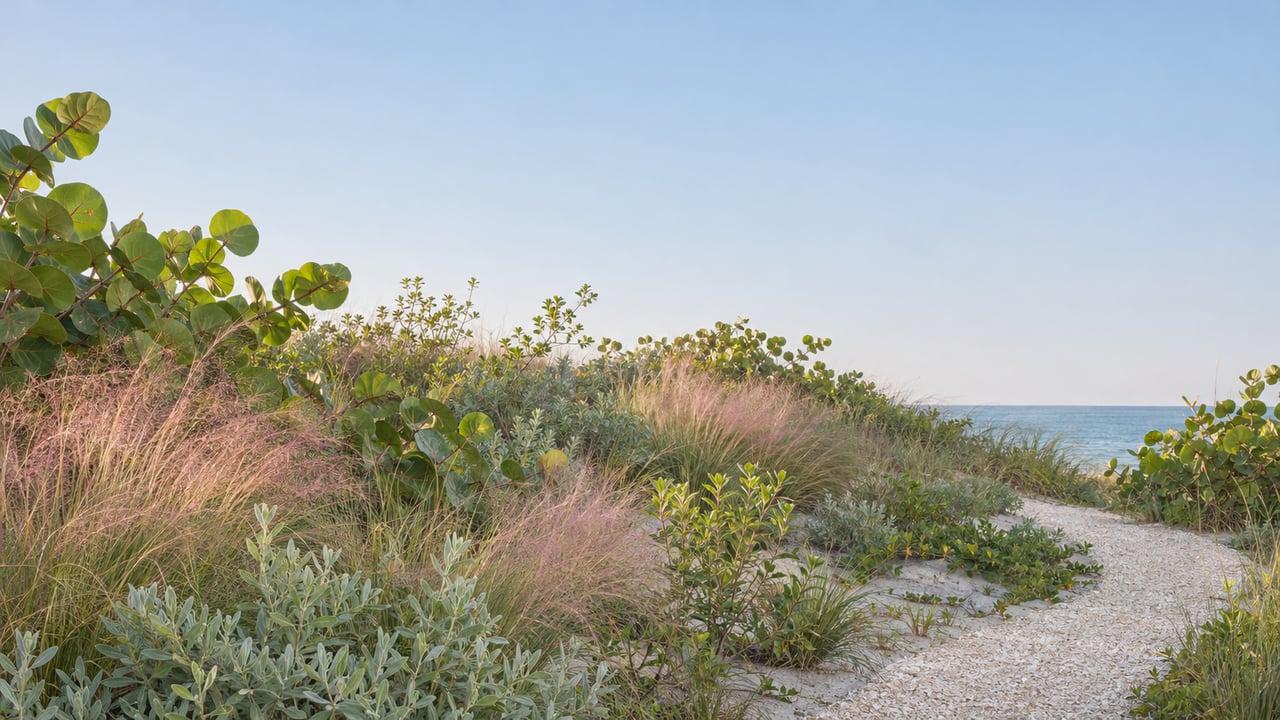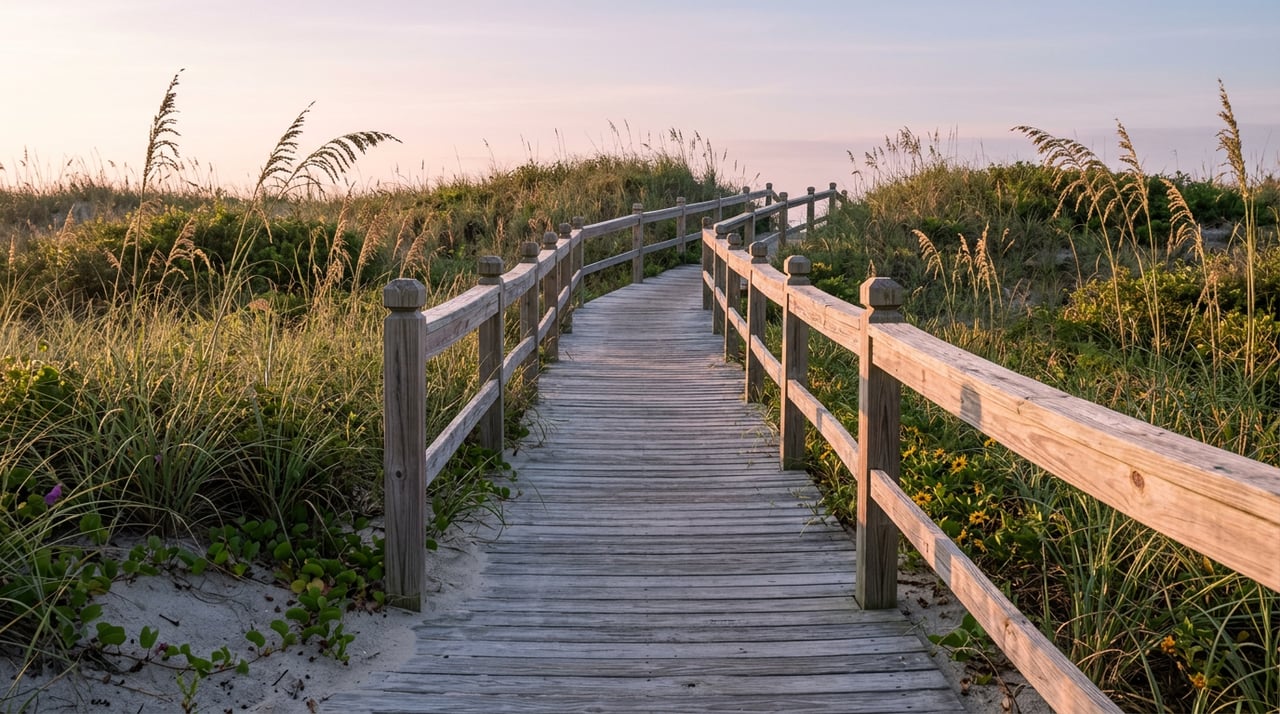
Walk the hard sand between Sunset Avenue and Wells Road before 9 a.m. this week, while the Town's off-leash window is still open, and you'll notice something that wasn't there in June. Not a single heavy drag mark cutting from the dune line to the water, the kind a nesting female leaves behind, but a scatter of small tracks fanning out toward the surf, dozens of them, already fading in the morning light.
That's the tell. Whatever picture you've been carrying around since March under the heading "turtle season," this isn't it. This is the second half.
Two Seasons Wearing One Name
Palm Beach County's sea turtle window officially runs March through October, and most residents learn to treat it as one long undifferentiated stretch: be careful, keep lights down, don't touch the stakes. But the season actually has a hinge, and the hinge is roughly now.
The clearest proof is what the region's own turtle programming does with its calendar. Gumbo Limbo Nature Center's 2026 Turtle Walk season, built entirely around watching nesting females come ashore at night, ended July 2. Its Hatchling Release program, built around watching newborns reach the water, keeps running on select nights through August 27. When the most visible public-facing turtle activity in the area flips from one kind of event to a completely different kind of event, that flip is happening on your own stretch of beach too. It just isn't scheduled or narrated for you.
March through July is the laying half. August into September is the hatching half. Same season, same signage, different biology entirely.
Why the Lights Matter More Now Than They Did in May
Palm Beach's Shielding of Light rule applies to every oceanfront property from March 1 through October 31, and the Town reissues the reminder to residents each summer: no artificial light visible from the beach, no exceptions for landscaping or pool glow, shield it or turn it off. Read literally, that could sound like a rule written for the whole seven months equally.
It isn't. In May, a nest sitting under the sand is doing nothing that a porch light can interfere with. Eggs don't navigate. By August, that same nest is doing something entirely different: cracking open after dark and sending a scramble of hatchlings toward whatever looks brightest on the horizon. A light that was cosmetic in spring becomes a false ocean in late summer, pulling hatchlings toward a pool deck or a driveway instead of the surf. The rule's language doesn't change across the season. Its stakes do, and they peak right now.
The volume behind that stake is worth sitting with. Discover The Palm Beaches, the county's tourism marketing arm, announced this spring that Palm Beach County had been designated Sea Turtle Capital of Florida, citing a 47-mile coastline that produces more loggerhead nests per mile than anywhere else in the United States and supports roughly 2 million hatchlings a year. And 2025 wasn't a quiet year to back that up: the county led the state with 25,614 tracked loggerhead nests, according to Florida Fish and Wildlife Conservation Commission data reported by Boca magazine. That's a lot of nests converging on a narrow window of nights in August and September, on the same beach where you walk the dog.
A Second Clock, Running on Nothing to Do With Turtles
Here's the part most residents miss entirely. Turtles aren't the only wildlife event happening on Palm Beach's sand this month. The Town's own coastal reminder notes that a least tern nesting colony is currently active on the island's north end, and it runs on a completely separate schedule from anything involving loggerheads or greens.
Terns don't bury their nests. They lay directly on open sand, in shallow scrapes, easily flushed by a dog off leash or a beach chair set down in the wrong spot. There's no lights-out ordinance built around them, no October 31 sunset clause. Their protection is simpler and more immediate: distance, and staying off the stretch where they've settled in. If you've noticed a roped-off patch of open beach at the north end that doesn't look like a turtle nest, doesn't have the same stake-and-tape marking, that's likely why. It's a different animal, running its own clock, on the same sand.
What Actually Changes on the Walk This Week
Put together, here's what's different about the beach in mid-August compared with the beach in May:
- The off-leash window shrinks to its tightest version of the year: dawn to 9 a.m., and only on the stretch between Sunset Avenue and Wells Road. After that, it's leash everywhere, all day, for the rest of the season.
- The staked, taped rectangles you pass are no longer freshly laid nests quietly incubating. Many are close to hatching, which means the next set of tracks you see fanning toward the water could appear on any given morning without warning.
- There's a hush zone at the north end that has nothing to do with turtles at all, where least terns are sitting on open sand and the only real protection they get is people and pets keeping their distance.
None of this shows up on a calendar most residents check. It shows up as tape you didn't remember from last month, a leash going back on earlier than usual, and a stretch of open sand at the north end that suddenly has company.
Where Both Clocks Reset
Both wildlife events on Palm Beach's sand run out roughly the same time. The Town's lighting requirement lifts October 31, which lines up with the tail end of hatching activity countywide. The tern colony, left alone through its own cycle, should have moved on by the time that deadline arrives too.
If you want to see the choreography up close instead of piecing it together from tracks the next morning, Gumbo Limbo Nature Center in Boca Raton has its Hatchling Release program running on select nights through August 27, a short drive south. It's the same biological event playing out on Palm Beach's own beach nightly without a program guiding it, just narrated for once instead of left as a set of tracks for you to interpret on your morning walk.
Until then, the short version for anyone walking the sand this week: watch where you let the leash off, give any roped section on the north end a wide berth even if it doesn't look like a turtle nest, and if a neighbor's porch light seems dimmer than it did in the spring, that's not an accident. That's the second half of the season, working exactly as intended.
Sell With Confidence
Knowing what's actually happening on the sand this month, not just the generic version of "turtle season," is the same kind of granular, on-the-ground read we bring to every listing conversation on the island. If you're weighing a move involving oceanfront property in Palm Beach and want a team that tracks the details that actually matter here, from lighting compliance to the rhythms of the market itself, reach out to the Leavitt McIntosh Team.
This article is general information, not legal, tax or financial advice. Consult a qualified professional about your situation.